Showing posts with label Iran. Show all posts

31 July 2015

Reflections on Iran

A lot of people have of course been offering their views on the Iran nuclear deal, both before and after it was finalised. In the USA in particular, most of these opinions are un- or mis-informed, and are largely the manifestation of a deep-seated bias against Iran, which in turn arises from Iran's successful resistence against British and American imperialism. Americans, in particular, are deeply resentful of any country (e.g., Cuba, Venezuela and Vietnam) that successfully challenges their perceived entitlement to their self-appointed role as global hegemon.

With respect to the nuclear agreement, I personally support any and all efforts to limit or eliminate nuclear weapons, and so to the extent that this deal supports that broader objective I am supportive of it. But of course addressing the specific concerns arising from the Iranian nuclear programme whilst ignoring the far bigger threats posed by Israel and most of all, the USA, is obviously akin to a doctor being concerned with a foot blister on a cancer patient. Countries like the USA and Israel, who continue to harass, intimidate and imprison opponents of their respective nuclear programmes have no moral authority to judge Iran on its programme. I am particularly offended by the fact that whilst the American effort to limit Iran's capabilities is based on Iran's international committments as a signatory to the Non-Proliferation Treaty (NPT), the USA declines to publicly express concern for the fact that Israel is one of only four countries globally (the others being North Korea, India and Pakistan) that has refused to accede to this accord. Moreover, the Obama Administration has based its concerns in part on the "fact" that as Iran is sitting on immense fossil-fuel reserves, it has no "legitimate" need for nuclear power. Yet in the 1970s, when Iran was under the brutal but loyal rule of Reza Pahlavi Shah, the Nixon and Ford administrations actively supported General Electric and Westinghouse in their efforts to export American nuclear technology to Iran.

But the recent history and the nuclear deal aside, I am more baffled by the British and American choice of allies in the struggle for regional political and economic dominance between the Kingdom of Saudi Arabia and the Islamic Republic of Iran. While the U.S. Congress continues to promote the generally unsupported view that Iran is an "exporter of terror," it is the Kingdom of Saudi Arabia that for decades has promoted its own violent and intolerant version of "Islam," "Wahabism." Saudi-funded "madrassas" promote intolerance and extremism in places once known for their moderate versions of Islam, such as Morocco, Bosnia, Pakistan, Malaysia and Indonesia. ISIS, Boko Haram, and Al-Qaeda are all end-products of a decades-long, deliberate effort by the Saudis to radicalise Islam globally, with the explicit objective of making hatred and violence a core belief of this "faith." In Saudi Arabia, all faiths but Islam are banned; churches, synagogues, temples and other non-Islamic places of worship are illegal, and priests and others have been tortured by Saudi authorities for the "crime" of practicing their faith.

In Iran, in contrast, Christians, Jews, Zoroastrians and others worship freely, although Iran's history of persecution of the Bah'ai is shameful. Jews fled North Africa, Syria, Iraq, Yemen and other Arab countries with ancient Jewish communities decades ago, and the Christians have been following in recent years. Iran, however, remains home to a thriving and secure Jewish community, a fact even the New York Times has acknowledged.

Like most Arab countries, Saudi Arabia is largely incapable of managing or producing anything without foreign assistance. No automobiles, white goods, or consumer electronics of any consequence are produced in the Arab world. Exports such a fossil fuels, petrochemicals and aluminum are produced by plants managed by Europeans and staffed by Asians. Other than the radical Wahabist rantings noted above, there are no cultural exports equivalent to American movies, Mexican soap operas, European cuisine, or Japanese graphic novels that originate from the Arab world. Iran, in contrast, produces both its own brand of automobiles, the Paykan, and also assembles other brands, such as Peugot, under licence from the manufacturer. It has many other thriving industries, and it is a prolific source of both intellectual property and physical goods, in plants and instutions managed and staffed by Iranians.

Saudi Arabia is a strict totalitarian state, run by what amounts to an organised crime family, the House of Saud. Iran is governed by one of the most vibrant and well-functioning democracies in the world.

I am not of course arguing that Saudi Arabia has no redeeming qualities, or that Iran has no flaws. But it is baffling to compare these two competing political entities and understand why the USA, and the British before them, have consistently chosen to support the corrupt and dangerous Saudis over the responsible and capable Iranians.

Blogndog

31 July 2015

Tbilisi

17 July 2015

Adventure Calls

I've spent the last few weeks travelling overland from Qatar to Armenia in my Land Rover Defender, "El Guapo," (from where I flew here to the USA); the next few blog posts are about my adventures and experiences on that trip. I am posting these all at once as most of this period I was in Iran, where access to blogger is blocked by authorities. The dates of the original drafts are as noted at the end of the blog entry, although all were posted more or less simultaneously.

Blogndog

17 July 2015

Ann Arbor

16 July 2015

Later, Mullah-Fuckas!

I of course mean the title of this entry in the most friendly, 'hip-hop' sense, so hope that none of the many kind and wonderful people I met in Iran (or anyone else) take any offence from it. If anyone does, well, get over it...bitches!

After our unsuccessful visit to the police station on Monday, Mehdi and I returned to the Hotel Sahand in Tabriz, had some lunch and discussed and digested the news about the nuclear deal, which had just been announced in Vienna. Iranians appeared to be thrilled, but I think the economic circumstances caused by the sanctions have created a lot of jobs, and many of those will disappear as domestic production is replaced by imports as the rial strengthens and trade barriers fall.

Monday evening I needed to rebook my flight to the USA, but every time I called Austrian Airlines, I just listened to recordings until my phone ran out of money. I did this three times, at 10 bucks a pop, before I decided I just needed to load up the account and stay on the line until I could get through. I changed my last of my 100 Euro notes for riyals and spent half of them on about 30 recharge vouchers. It took over an hour to tap in the 16 digits required for each one, and when I finished, I had over 400 thousand riyals on the account and my battery was almost dead. Recharged for 15 minutes and dialled Austrian again. Of course, they picked up almost right away, and inevitably, they charged me 900+ dollars to make the date change to Thursday. Finally went to bed after 11:00.

Next morning, of course the first stop was police headquarters, and this time we had the opportunity to pay homage to the Keeper of the Traffic Offences, who pronounced us violation-free, and issued a written Fatwa confirming that he was cool with us leaving Iran. We were out of there, less one set of temporary Iranian number plates and with our papers in order 10 minutes later.

Then the drive back to the border. I had the stamped carnet and the farewell wishes of the customs director 10 minutes later, but still had to get the OK from about six more guys before I could actually leave. First, customs, who entered all the details about myself and my vehicle in the computer. Then immigration – first to talk to one guy who asked all kinds of questions ("what is the capital of Michigan?"), scanned many pages of my passport, and entered a bunch of stuff in his computer. Then a second guy – more questions, more typing stuff in the computer before finally giving me an exit stamp. Back to customs. Vehicle paperwork issued. Heartfelt good-bye to Mehdi, then the barrier was lifted, and then I was free to go...to the next checkpoint, that is. Another paperwork check. More info entered into a ledger. Finally, the barrier was lifted and I drove onto the bridge over the Aras River (separating Iran from Armenia) and joined queue of vehicles waiting to enter Armenia about 10 meters over the border at about 13:30.


Yay! I'm out of Iran! – on the bridge over the Aras River, which forms the Iran-Armenia border. The Iranian part of the railing is painted red, white and green (the Iranian national colours); the Armenian portion is a utilitarian grey. The stripe on the roadway is the border


Snacked on some fruit and cheese while I waited and then had an initial check before being permitted to continue to immigration. This took a while, in part because the guy keep looking suspiciously at the extra pages that had been put in my passport, under the watchful eye of the portrait of Russian President Putin on the wall behind him. Then a "vehicle check" by another suspicious character before I was allowed to continue to the customs and immigration hall. Unfortunately, in conducting this check the inspector discovered that El Guapo's right rear wheel hub was missing its rubber cover and was leaking oil. They kept asking for my "card machine," meaning vehicle registration, and were reluctant to accept the form printed on an ordinary sheet of A4 paper that was the only ownership document Qatar had issued. They eventually accepted it and directed me to the bank to pay the fees and get my documents copied. The fee was 52 dollars, payable in dollars, euros, or Armenian drams. Unfortunately, I had only about 32 dollars and €5 remaining after the day before. Canadian dollars, Swiss francs, and sterling were all rejected. There was a cash machine, but it was out of service, so I had to pay extortionist rates to get a taxi into town to find a bank. On the way back, I stopped at the insurance shack just outside the customs facility to buy the mandatory vehicle cover. Returned to bank, paid my fees, made copies of everything, and returned to the customs broker.

It took well over an hour to finish everything, in part because in crossing from Iran to Armenia I left the part of the world where officials didn't know the country I was going to (Czech Republic), and entered the zone in which nobody knew where my vehicle was from (Qatar). The agent left her desk three times to consult with her superiors, only to return to her computer and stare at the same two short documents she had in front of her, my passport and my vehicle export certificate. Between them, there probably wasn't more than a dozen pieces of information there – my name, surname, passport number, date of birth, place of birth, chassis number, registration number, etc. But for unexplained reasons dozens of other customers arrived, got their paperwork processed and left while she continued to struggle with my documents. Finally I was given leave to return to my vehicle. Once there, the same suspicious customs officer I encountered earlier again searched the vehicle, then directed me (and it appeared, me alone) to an adjacent building to have the vehicle scanned by a giant x-ray machine. Then back inside the customs hall for more discussions between the customs official and the customs broker over my vehicle paperwork before everything was finally signed and stamped. A final check at the exit and El Guapo and I were legally inside Armenia.

Even with gaining a half hour from the time zone difference in crossing the border, it was still after 17:00 when I was finally under way to Yerevan, over 400 km of narrow, twisty mountain roads away with limited traffic and limited facilities in a vehicle with a faulty wheel hub. I passed a couple of mechanics in the nearby town of Meghri, and considered having one take a look, but fixing the problem I was sure would require replacing the wheel hub seals and the chances of finding those locally were close to zero. There was no noise and no abnormal heat in the hub, so I decided to risk it rather than almost certainly miss the opportunity to say goodbye to my father.

The road and the landscape I passed through over the next hour was as beautiful and dramatic as it was challenging to drive. The road rose to well over 3000 metres at several points, before bringing me to the town of Kadzharan at around 18:40, where I found an Orange Armenia boutique just before closing, where I was able to buy a local SIM card and some airtime before hitting the road again.

Some views of the dramatic and dangerous road linking Meghri with Yerevan


I had arranged to park the vehicle at a charity facility owned by a friend of an Armenian friend of mine in Yerevan, but hadn't received any response to the texts I had sent earlier in the day from Iran. I tried calling the two contact numbers I had, but one was switched off and the other had no response. I left a voicemail with my Armenian number and continued on my way.

I crossed over four more mountains over the next two hours, the desert of Iran gradually changing to dense green forest before arriving at Goris on the "main" highway. Just after the intersection was a mechanics workshop. I stopped and tried the numbers in Yerevan again without success, sent two more texts, had a look at the wheel hub again and considered asking the mechanic to have a look. More leaking oil was clearly visible, but still temperatures were normal. I decided to press on.


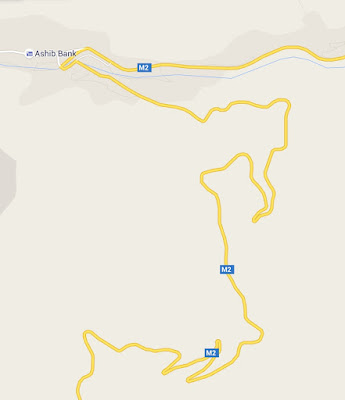
A screenshot from Google Maps showing a representative section of the road from Meghri to Yerevan


Now the road was straighter and flatter, but it was also now dark. For the first time in hours, I got El Guapo into 4th gear, even 5th a couple of times, as I careened through the darkness on the poorly paved road. I passed numerous heavy vehicles and then began descending towards Yerevan as the twists and switchbacks turns returned. Several treacherous turns combined 180 degree hairpins with washed-out roadways. Losing control and plunging into a chasm would not have been difficult, but finally around 23:00 I reached the main road and started the final 50 km dash into Yerevan, setting off at least three speed cameras along the way, and nearly continuously praying that my left rear axle wouldn't seize up.

I never managed to contact anyone from the charity, but I had the address and decided to go there to see if I could rouse the caretaker. I arrived in Yerevan around midnight and found a busy petrol station frequented by taxi drivers, and the help of some friendly young Armenians, managed to find one that would be willing to escort me to the address I had for the charity. I waited in the vehicle for a few minutes while he filled his tank, and while doing so, some drops of viscous liquid dripped onto my windscreen. I assumed it was from a tree or something and didn't think anything of it at the time. I followed the driver through Yerevan traffic. We stopped to ask directions of some more friendly young Armenians, who knew exactly the charity I was looking for and how to get there. I continued following the driver through the city; at one stop light, more liquid dripped onto windscreen, and I suddenly realised it must be diesel leaking from one of the jerry cans on my roof rack. I got out to have a look, but when the light turned green, the taxi sped away. I jumped back in and raced after him, but at a fork a couple hundred meters later, I lost sight of him and mistakenly followed the wrong taxi. As soon as I realised this, I pulled over and waited and thankfully he soon reappeared.
We found the charity without further difficulty, but it was so dark and quiet it almost appeared abandoned. I tried the bell, and we both tried pounding on the gate and shouting, all to no avail. Plan B was to park at the airport, So I asked the driver to lead me there. Fortunately, it wasn't far away, so I paid and thanked him just outside the entrance to the airport car park.

Naturally, this trip could not end without one final bit of drama. Like most, the car park entrance featured a notice indicating the headroom (2,4 metres) on a hanging board designed to impact any part of a vehicle above this height. Because it hung from chains, it was intended to do so without causing damage. The driving lamps at the front of the roof rack cleared easily, but the jerry cans looked very close. I inched forward. A driver stopped and waved me forward, indicating I was clear. I got out and stood on the bumper. It looked like I had about 4 cm to spare. I inched forward some more. The jerry cans cleared the height indicator. However, about a metre further into the garage was a second headroom indicator, like the first covered in red and white stripes. Unlike the first, however, this one did not swing freely from chains suspended from the ceiling, but instead was a solid steel I-beam. And it was about 10 cm lower than the first. As best I could tell, this was an ingenious system designed by the Armenians to foil any invading Turks, who would be lulled into a false sense of security by the first barrier and then have their vehicles disabled by the second.

I stopped short of the steel beam, climbed onto the roof and unlocked the jerry cans. I found the one that was leaking, poured what was left into the fuel tank and abandoned it by the entrance. The jerry cans were at the rear of the roof rack, but the leak had dripped diesel into one of the channels on the roof rack, through which it had flowed forward to drip onto the windscreen. I laid the remaining cans flat, drove in and parked, then replaced them on the roof. Cleaned out the fridge and the trash, gathered the things I was taking with me, and then backed El Guapo up against the concrete wall, making it nearly impossible to break in to the back.

Headed into the terminal – reeking of sweat and diesel – and checked in at 2:30, almost exactly two hours before my flight. I remembered almost everything, but at the checkpoint realised I still had my rescue tool, which includes a knife blade and seat-belt cutter, on my belt. I was surprised and pleased to learn that they could hold the item for me for up to six months, so I handed it over and filled out a form that would allow me to reclaim it on my return.

Briefly spoke to my brother to tell him I had made my flight and to expect me in Detroit. Bad news about my Dad -- both mind and body faltering. Twice he has fallen and hurt himself. I will likely be there before he passes, but he may not be someone I recognise, and he may not recognise me.

In the lounge, had my first beer for 3 weeks. Boarded my flight and arrived in Vienna later that morning. Stopped into Hugo Boss and bought a shirt for Dad's funeral, which I had neglected to pack, then boarded a connecting flight to Frankfort, and then a third flight to Detroit. Still wearing the same clothes I put on Wednesday morning in Tabriz. I'll be seeing my Dad soon.

Blogndog

16 July 2015

Lufthansa flight 442, en route from FRA to DTW

14 July 2015

Faith Doubted

I set two alarms for 5:00 this morning. Rose, showered, dressed, packed and loaded the vehicle by 6:00. After a stop for fuel we were on the road to Jolfa. Along the way, we passed a rare, almost perfectly preserved caravanserai amidst the dramatic mountain scenery. I’ve seen other preserved or restored caravanserai (just what is the plural form of that word?) in places like Nicosia and Aleppo, but this one appeared much as it would have to a 17th century traveller, with no modern car parks, signage, souvenir shops or other evidence of later centuries.

After Jolfa, we passed the crossed the railway tracks that once led to Moscow – before the line was interrupted by Armenia and Azerbaijan’s war over Nagoro-Karabakh in the 1990s — via the ”Iron Bridge” over the Aras River, which separates Iranian Jolfa from Azerbaijani Djulfa. From that point, the road followed the river for more than 50 twisting kilometres, with increasingly dramatic mountains on both sides. At some point, the opposite bank became Armenia rather than Azerbaijan, and we arrived at Norduz and the Meghri-Norduz border crossing soon afterwards.


Looking across the Aras River from Iran at the Azerbaijani village of Kotam


As usual, we were misdirected a few times before we found the office we needed to handle El Guapo’s exit paperwork. At around 10:30, we got some bad news — we could not exit until the police had removed El Guapo’s temporary Iranian number plates, and that had to be done at police headquarters back in Tabriz.

We wasted the better part of another hour trying to find a way around this requirement, but eventually headed back to Tabriz at 11:45, hoping to make it to the police station before it closed at 14:00. Mehdi spent much of the ride telling me how hopeless it was we would manage to do this today — why do I keep attracting this Marvin-the-manic-depressive-robot type personality into my life? We had a little difficulty in finding the place, but eventually pulled at the front gate at 13:58, and were reluctantly admitted. The usual running around various offices ensued before we were directed to another gate, being aggressively protected by a young officer who was allowing people to exit, but no one to enter. Mehdi spoke with them in Farsi, then told me it was ”not possible” today. He hadn’t even tried to sound even vaguely desperate, so I pushed him aside, addressed the officer and said, ”please, sir, please, please please. We have just driven 2 ½ hours from Norduz to come here. we had trouble finding it. Have you ever driven that road? It’s a terrible road, very dangerous. I drove very fast on this road so I could get here before two. Please. Please, please, let us in. Please.”

”OK,” he replied, and stepped aside to allow us to pass. If you want something done right, you’ve got to do it yourself.

The familiar routine ensued. First find the right office. Then speak to the junior guy tells you it can’t be done. Ask to speak to his superior, a Colonel. Talk to the Colonel. Have him call the junior guy in. Let them discuss it for a bit, then have the junior guy find the right form and have the Colonel sign it and stamp it. ”Bring the vehicle to the gate so we can remove the number plates,” he said. Things were looking good.

I drove El Guapo around to the gate, where a cluster of three functionaries waited. There were no tools in the facility. I brought several kilos of tools, but no drill. ”You should have brought a drill,” observed Mehdi. Thank you, Captain Hindsight. Using a big hammer and big screwdriver, I managed to bash out the rivets holding the number plates in place with minimal damage to El Guapo. In the meantime, Mehdi and the others had disappeared. They soon returned with bad news: there was one more step required — they need to confirm that I had no outstanding traffic violations, and they guy who did this had just left for the day. Come back tomorrow at at 8:00. No way around it.


Bashing my way out of Iran (photo: Mehdi Fatemi)


We returned to the always charming, fully-amenetied Hotel Sahand. Mehdi cancelled his flight back to Shiraz. I had to pay for the cancelled flights, another night hotel for both of us, and another day of Mehdi’s guide fees. Total cost - 482 USD. I was broke but manage to find some unused Omani Riyal left over from my trip there in March with MJ, which the agency agreed to accept as payment.

In the meantime, rejoicing in Iran and the scent of political opportunity amongst Republicans in Washington as a deal to end sanctions over Iran’s nuclear programme was announced in Vienna. I should have asked John Kerry to toss in exit clearance for myself as part of the deal.

Blogndog

14 July 2015

Tabriz

13 July 2015

Lucky 13th

I made the increasingly familiar trip to the foreigners police station again this morning, this time praying continuously to the collection of angels, saints, prophets, buddhas, bottisatvas, revered ancestors, etc. that have gotten me this far. The first good sign was that my passport didn’t appear to be in the ”waiting to be processed” pile any more. However, after a few minutes it appeared that it wasn’t in any of the other piles either — possibly at the foreign ministry. However, they found it eventually — perhaps it was in the ”people who keep coming back here and bugging us to do our jobs” pile. They asked us to wait — a good sign, and sure enough I was summoned to the window 10 minutes later where they delivered my passport complete with a 1 week visa extension.

We drove back to the hotel, where I hastily packed and loaded everything into El Guapo. The leisure battery had been completely discharged while it waited in Shiraz, but plugging in the battery charger overnight restored everything to working order. We departed the Hotel Khayyam at 10:00 sharp, and entered the mobile lunatic asylum that is Tehran traffic. Without GPS, we made a few minor navigation errors but before 11:00 we were out of the city and on the highway to Tabriz.

Over the next few hours, the traffic steadily grew thinner, and the landscape less urban and more dramatic. At several points, the road approached 2000 metres above sea level, but never quite reached that high. Eventually, we entered the city of Tabriz and spent a good hour circling around trying to locate our hotel, a tiny storefront entrance that I eventually spotted. Then spent another hour trying to figure out how to approach by vehicle, as the main entrance was located on a bus lane. Eventually we found the narrow alley — scarcely 40cm wider than El Guapo — that led to the hotel car park.


Navigating the narrow alley that leads to the Hotel Sahand car park


On a short pedestrian street nearby, I found more restaurant options than I did in all of Tehran, but had to wait until dusk to eat. Tomorrow, I hope to finally leave Iran.

Blogndog

13 July 2015

Tabriz

04 July 2015

Solihull, We Have a Problem

After seeing the Pink Mosque, my guide Mehdi and I returned to El Guapo. He started up normally, I put it in reverse and started to back out of my parking space. Suddenly, the air con stopped working, which immediately caused me concern, as in past experience this has always been the first sign of a serious electrical fault.


Interior of the Pink Mosque


More signs of trouble soon appeared. The alternator light came on. The tire pressure monitoring system screen went dark. Nonetheless, the vehicle was still running, so somewhat against my better judgement, we continued to our next stop, the former hammam, or bath house. I didn’t learn so until we toured this facility that Reza Pahlavi Shah ordered all the hammams in Iran closed some 85 years ago, as he considered them a sign of backwardness. This one was preserved as a museum.

I pulled into a car park and thoughtlessly turned off the ignition. I tried to start again. As I expected, nothing. Fortunately, Shiraz is Mehdi’s home town, and he knew plenty of people. A mechanic was contacted. He would meet us in an hour’s time, after we finished the bath house tour.

When we returned to the vehicle, he was waiting. Although I explained it was a waste of time, we tried jump starting the vehicle. Nothing. I dug out my multi-meter and checked both batteries. 12,6 volts from each. Not the problem. The mechanic suggested we swap out the battery and drive to a garage. Again I explained it was a waste of time, but again I was ignored. A friend of Mehdi’s would bring a fully charged battery. In the meantime, we had some lunch and then went to see the nearby castle.

Mehdi’s friend was waiting when we returned. Again I showed him that the batteries were charged. ”Try it anyway” they said. Doing so is not so easy with El Guapo, as he is outfitted with a dual battery system. First, remove the driver’s seat and open the battery compartment. Remove the terminals from both positive battery posts. Remove the terminals from the negative battery posts. Remove the two bolts that secure the batteries into place. Carefully slide out the bracket without shorting out either of the batteries. Remove the leisure battery. Slide the starter battery forward and remove it. Drop the new battery (actually, it was an ancient, filthy, acid-leaking mess, but it was fully charged) into place. Connect the terminals. Demonstrate that the vehicle still will not start. Take momentary satisfaction from the ”I told you so” moment. Then painstakingly reverse the procedure. Now you have wasted a full hour in the hot Shiraz sun, but now Mehdi is persuaded he needs to call a tow truck.


Poor El Guapo :(


The tow truck arrived shortly and we followed it through Shiraz traffic to a garage on the outskirts of town. The mechanic there quickly confirmed what I had been saying all along — burnt out starter motor, a motor which in fact I had just had installed less than a month earlier when the previous one failed in a similar manner. Clearly some underlying problem was causing El Guapo’s starter motor’s to burn out, but I had no idea what. A vehicle electrician was summoned from another garage. They couldn’t figure out how to remove the starter motor, which is buried deep in the engine bay and not easily accessible. They insisted it would need to come out through the top, which would necessitate dismantling the diesel injection system. I knew this not to be the case, and told them to remove it from below. They couldn’t manage it, and it was getting late. I had the entire workshop manual for the vehicle on my laptop, but it was back at the hotel. We agree to return early the next morning to deal with it.

The driver and Mehdi collected me from the hotel, with laptop in hand, early the next morning. We headed back to the garage. We decided to have the vehicle towed again, this time to the electrician’s garage. Mehdi found a flat-bed, and soon we were unloading the vehicle at the other garage. No sooner did we finish, however, than Mehdi finished a phone call and told us he had found a better mechanic. El Guapo went back on the flat-bed and we all headed to the third garage.


More Indignities


We left El Guapo with the mechanic and headed to the Necropolis and Persepolis to do some sightseeing. The Necropolis tombs, which included Xerxes and Darius, were carved into living rock in the style of Petra. Nearby was a curious, cube-shaped stone temple of apparently unknown purpose and origin. This one was in almost perfect condition, and we saw another similar but half-ruined one the next day at Pasargad. Both were reminiscent of the Ka'aba in Mecca, and I can’t think of any similar structure — a simple stone cube -- anywhere else in the world. My fiancé would no doubt attribute all three to aliens, a theory supported by ancient, pre-Islamic legends that say that the Ka’aba is ”not of this world” and that it was build by ”angels” who came from the sky (some legends say it was the Archangel Gabriel, specifically). I cannot contribute meaningfully to this discussion other than to say it certainly had a very alien feeling about it.


I'm not saying it was aliens, but...


Next was a sight I had been wanting to see for a very long time — Persepolis. But first we had an update from the mechanic. The starter motor was burned out, and nothing could be done to repair it. I would have to find a way to put my hands on a replacement. I had the driver pull over in the shade, and I rang my friends in the parts department at Nene Overland in the U.K. No, they did have a starter on hand. Yes, they could get one next day. Shipping to Iran? Not sure — would have to check with TNT. An email came through a few minutes later — no problem with shipping to Iran. I rang Nene again and gave them my credit card info, and I was promised it would be on its way to me the next day.

The stone carvings on the palaces at Persepolis were in amazing condition — indeed looking very recently carved; this is because for centuries they were buried in the sand until being rediscovered by and excavated under the guidance of the famous German professor and archaelogist Ernest Herzfeld in the 1930s. This had also saved the ruins from intentional destruction by the Arabs in the 8th century, who did demolish what parts of the ruins they knew about. Mehdi was quick to remind me the Arabs would not hesitate to have another go at destroying this site if given half a chance, just as they had done recently at Nineveh in Iraq.

Even before seeing the cubic temple that morning I had been put on the alert for signs of ancient aliens by my fiancé, who had informed me that Persia was a focus of alien activity in ancient times. I am generally skeptical of such theories, but was taken aback when I found a carving that appeared to show helmeted astronauts in one of the palaces (the Mirror Palace).


Ancient astronauts? Or just guys with really bad fashion sense?


After our tour we headed back to the mechanic’s workshop, where we were able to observe the remains of the motor brushes for ourselves. For reasons unknown, the mechanic said he was not able to remove the starter motor without first removing the front left mudguard, which in turn could not be removed without de-installing the water pump for the shower system. Not sure why — as I said, this was my third starter motor and it had not been a problem to remove it before. He assured me he could get everything back together again, but I am skeptical. In any event, nothing to be done now except to wait for the new motor to arrive. Or for aliens to intervene somehow.

Blogndog

4 July 2015

Isfahan

03 July 2015

That’s No Mirage, I’m in Shiraz!

Abadan was swelteringly hot when we left, as it was the whole time we were there. In fact, besides being the site of the refinery that was essentially the start of British Petroleum, and also the focus of some of the bloodiest battles of both WWI and the Iran-Iraq war, Abadan’s main claim to fame is having the highest known temperature on the planet, a heat burst that hit 87° C in June 1967.

The road started flat, straight and smooth across a featureless, shimmering plain, and continued that way for several hours. An escarpment arose in the distance, and eventually we started to climb into some hills. The road twisted through a series of rugged red canyons and steadily gained elevation. Twice I was stopped by police — once for speeding, and once for overtaking on a curve; both times managed to be declared innocent on grounds of insanity. On entering Shiraz province, the hills became proper mountains, and soon we were crawling along a series of switchbacks behind a long queue of heavy lorries. El Guapo managed to pass them one by one, leaving my guide looking a bit pale at times. Finally the road levelled out and soon we were on the outskirts of Shiraz.

We dodged vehicles, motorcycles and pedestrians for a few kilometres before arriving at edge of the old city, where my hotel was located. I turned down a narrow alleyway, and drove into the old city itself. The streets grew narrower as we got closer, at one point requiring us to fold in both wing mirrors to squeeze through a particularly narrow passageway, but we made it to the hotel and safely parked El Guapo in the car park.

Got up early the next morning to have a stroll around the old city before joining my guide about 9:30 to go to his agency to settle my bill. Due to sanctions, there was no way for me to pay for my trip in advance, and the agency had made all of the arrangements based only on my my email commitment to do so on arrival. Honouring that commitment, I counted out a big stack of hundred Euro notes for the agent.

At last, we were ready to do some sightseeing. Our first stop was the Pink Mosque, a beautiful 19th century tiled edifice with incredible stained glass windows. Finally my trip was going smoothly…or was it?

Blogndog

3 July 2015

Isfahan

02 July 2015

Kafka, Schmafka — Welcome to Iran!

Last day of bureaucracy! (I hope). Got an early start, and my guide and I headed to the traffic police to get temporary Iranian number plates. After waiting our turn, we were told they had no more plates, and we would have to go to the police in Khorramshahr to get them. But first, we would need a letter signed by the Abadan Chief of Traffic Police, and he was not in the office. And the vehicle would need to be inspected. We headed to the inspection facility, and hoped that the Police chief would arrive by the time we returned.

Inspection was relatively efficient. We handed over our documents and drove inside. The inspector asked me turn on my headlamps. I did so. He asked me to put the vehicle in reverse so he could verify that the back-up lights were working. I did so. ”Thank you, you have passed inspection.” Another signed, stamped form was added to my bulging document wallet.

We returned to the traffic police. Still no chief, but we struck up a conversation with two mysterious guys driving late model vehicles — a Toyota Land Cruiser and a BMW Z4 — with Kuwaiti plates. I’m not really sure what happened next, as most of the discussion was between them and my guide in Farsi, but a few minutes later, we had the letter from the Police chief and we were driving into Khorramshahr to pick up the number plates. I waited outside with one of the guys while my guide disappeared into the building with the other. Half an hour later my guide emerged carrying a stack of number plates. We drove back to the Traffic Police, waited our turn, filled out more forms, handed over more copies of my passport, signed and fingerprinted a bunch of documents, and finally was issued a registration card. Went outside with the new plates and waited for a guy with a drill and a rivet gun to attach them. While we were waiting, another ”customer” emerged from the building, clutching his new number plates to his chest. He kissed them and shouted ”Allahu Akbar”. I looked at him sympathetically. ”God bless Iran!” he said, ”because nobody else will!"

My new plates were fixed on top of my Qatar export plates, as I would need them when I left Iran. We were done. We drove back into Abadan, had lunch, and set off towards Shiraz. Allahu Akbar.

Blogndog

2 July 2015

Shiraz

Iran at Last

I was directed to pull over a few meters inside of Iranian territory. The same border guards who had been so surly the day before were all welcoming smiles. First order of business was to search the vehicle, which is a task they apparently enjoy immensely. Since they were speaking in Farsi, I didn’t understand most of it, but just about every one of my bags elicted a wise-crack from one of them, which would cause the others to pause and laugh hysterically before retorting with an even funnier joke of their own. When they opened my box of camping supplies and saw the canisters of Camping Gaz on top, they shouted ”bomb!!” in unison and feigned ducking for cover. When they were done, all shook my hand warmly and bid me welcome to Iran.

A customs official accompanied me to the customs shed, where El Guapo would have to remain until clearance procedures had been completed. After parking, I returned to the border post and started the immigration process. All the while, a friendly English-speaking guy in street clothes made casual conversation with me, but it was obvious he was with the intelligence services, inquiring about my family, my job, my life, and my politics.

Back at the border post, after waiting an hour for the right official to show up, I was formally interviewed, and again asked detailed questions about my life, my family, my beliefs, etc., this time with no attempt to disguise it as friendly conversation. In the end, the agent apologised for having to do so, explaining that procedures required it. In particular, he asked if had any knowledge of Iranian history or politics. ”Yes,” I replied.

”What is it you know?”

”I know a lot — is this a test?”

”What specifically do you know?”

”A lot. Would you like to start with ancient, Mediaeval, or modern Persian history? The Sassanids, the Timurids, the Safavids, the Qajar or the Pahlavi?”

That was it. My passport was stamped, but then I was told I would need to be fingerprinted. I assumed this was the standard border fingerprinting process, using a scanner, but instead I was put in a car and driven to police headquarters in Abadan. I was led upstairs to a small room adjacent to small dark cell, with a small and sad looking man gazing out through the bars. Directly in front of the cell was a table with an ink plate and roller. One by one, the police officer rolled my ten fingers in ink, and then again onto a fingerprint form. I thanked him, washed my hands, and then we went to our hotel in Abadan. It was now 14:00 (during the summer, you lose and hour and a half crossing from Iraq to Iran), and everything was closing, so customs procedures would have to wait until the following day.

Next morning we returned to the border post and first got a letter from the Customs chief at the border that would allow us to take the vehicle. We needed to get formal permission for import from Customs headquarters in Khorramshahr, where the General Director was expecting us. We drove to his office at Khorramshahr port, but found he had gone to a meeting back at the Salamchech border crossing, where we had just left. We waited an hour, and finally dispatched a driver to take our form back to Salamchech to have it signed. Finally, by 12:00 we had the signed letter. On our way in, we had engaged a clearance agent, and we found him in the first of three different facilities he would have to go to complete the import process and handed our documentation over to him while we went to buy insurance.

The insurance agency was in a tiny storefront on a nearby side street, and was staffed by a single agent. She prepared everything, took my premium, gave me a receipt and proof of coverage and we were on our way. We caught up with the clearance agent in another building. I mostly sat in chair for two hours while he went from one window to another, every so often waving me over to say ”pay this guy 100 dollars,” or ”sign this,” or ”give this guy a copy of your passport.”

Then we drove to another building near the entrance to the customs facility. The carnet was examined. Another copy of my passport was handed over. El Guapo was visually inspected. Another payment was made, and more forms were stamped. Finally, a gate pass was issued. I drove out and the clearance agent announced, ”congratulations, you have cleared Iranian customs.” I paid him his fee of 4 million Irani riyal, took my paperwork and drove off, arriving at our hotel in Abadan in time to watch Poland beat Iran in the FIVB World League volleyball tournament in Tehran.

Not quite done though, although again, it was now late in the afternoon, so the final procedures would have to wait until the next day.

Blogndog

2 July 2015

Shiraz

01 July 2015

If at First You Don’t Succeed...You’re Probably at Some Crappy Middle Eastern Border Crossing

The next few days passed in a blur of hopes raised and dashed, frustration and success. A brief chronology:

Friday

I parked El Guapo at the entrance to the Iraqi side of the Shalamcheh border crossing post. Didn’t have any proper camping equipment, but at least I had a cot to get me off the ground and safe from the ”cobras” the soldiers warned me about, which I set up alongside the vehicle. The first of many acts of kindness and generosity I was to receive from the personnel at this post in the coming 48 hours was having the police commander park his Ford F-150 on the other side of my cot, and put a barrier in front of me, so I was sheltered by vehicles on both sides, protected a bit from wind and shaded from the sodium vapour lights glaring at the entrance. Thankfully I still had a sandwich and some other food I brought with me from Doha, but despite the long day, I slept only fitfully, and was wide awake by 6:00.


Waiting for Major Saddam


Saturday

Spent two long hours watching the empty and entirely uninteresting landscape around me slowly brighten. Finally the post commander, introduced to me as Major Lawa Saddam, arrived in his convoy, and his men at the entry post explained my situation. He welcomed me and promised what help he could provide.

First, of course, there was more waiting around to attend to. I followed the soldiers to their barracks, where they made me a surprisingly delicious breakfast, made all the more impressive by the fact that they were fasting and couldn’t join me. We waited around until 10:00, when the Major summoned us to his office. His translator was waiting, and I was asked to ”leave my firearms” at the entrance. We quickly sorted out the papers needed for exiting the vehicle, and these were handed over to the appropriate functionary. Next, I needed an exit stamp, and the Major assigned one of his men to escort me to the ”Hall of Going Away” for this purpose. However, the ”Going Away” team directed me to the arrivals hall, which directed me back to some more senior functionary on the Going Away side. Papers were signed and stamped, and taken back over to the Arrivals side. I was photographed and fingerprinted, and finally, given an Iraqi exit stamp. I returned to the vehicle and drove up to the crossing. The Iraqis removed the barrier so I could cross. I started into Iran. Four guys came out waving their hands madly and shouting in Farsi. I rolled down my window. The Iraqis tried to help. I rang my Iranian guide, who was waiting on the other side, for assistance. After a half-hour stalemate with El Guapo straddling the international border, it was established that I needed to go back to the Iranian Consulate in Basra and get my vehicle papers translated into Farsi. The Iranians insisted it would take ”only 15 minutes." I turned El Guapo around and headed back to Iraq.


Everyone's favourite part of visiting in Iraq – the "Going Away" facility


I was not thrilled at the prospect of leaving the border post, and I had no idea where in that chaotic city the Iranian consulate was. I tried to get one of the Major’s men to give me directions, but the Major instead directed one of them to escort me. First, however, I needed to get my exit stamp cancelled It was 10:20 by the time we left, and 11:00 by the time we reached the Consulate. We were admitted immediately, but then learned the Consul was in a meeting and would not be free for an hour. However, I was invited to meet with some other very friendly but irrelevant functionary; I think he was the Literary Attaché or something like that. Nice work if you can get it.

After waiting an hour, I was informed that no such document (e.g. vehicle information in Farsi) was required, and the that the Consul himself had spoken with the chief of border post and he had confirmed this. He advised me to leave the vehicle on the Iraqi side, cross on foot to Iran, sort our the paperwork, and then return to retrieve the vehicle.

I returned to the border post, this time being waved straight through to the Major’s office. I parked the vehicle, and got a new exit stamp. I again approached the Iranian side. I told them what had transpired at the Consulate. They refused to budge. I called my guide again and told him what was happening. He said he would come straight away. I waited on a bench about two meters inside Iranian territory for him to arrive. We argued with the border guards. Finally, they agreed to go let us talk to Iranian customs, so we were escorted through immigration and driven across the complex to the Customs Office where we were able to meet with the director. He referred us to Customs HQ in Abadan, about 7 km away. He examined my documents, assured me that all was in order and that there should be no problem; however, the office was closed for the day.

I crossed back over to Iraq. Major Saddam had left for the day but his men were under instruction to take care of me, so I was put up in the Major’s own office complex, which not only featured the Major’s huge office and majlis, but also a staff room with a giant map of Iraq where I could plan the decisive counter-strike against ISIS. The staff kept bringing me food and tea as I caught up on the news on the Major’s flat-screen TV, and finally I went to sleep, praying to Jesus, Mohammad, all the Angels and Saints, all the Buddhas and Bottisattvas, the spirits of my ancestors, and especially St. Christopher for success the following day.


One of the many luxuries in the commander's headquarters at the Shalamcheh border facility – a choice of soap colour


Sunday

At 8:00 sharp I crossed over to Iran again, again met my guide and was escorted to the passport control office. My guide took all the paperwork, leaving me to watch TV in the Passport control office and catch up on the news of the nuclear negotiations in Geneva and Bree Newsome’s successful removal of the Confederate flag from a flagpole on the South Carolina Statehouse grounds. Two and half nail-biting hours later he returned with good news and bad news. First, apparently Americans are not actually permitted under Iranian regulations to travel to Iran in their own vehicles, and I was urged to consider leaving the vehicle in Iraq, visiting Iran, and then returning to my vehicle (what is it these people don’t understand about me taking the vehicle to Europe?). If I did so, I could enter Iran immediately. The good news — they would be willing to make the first ever exception (yay!), but I would have to begin the import process the following day (boo!). In the meantime, however, I could bring the vehicle over and park it at Customs.

I dashed back to Iraq. Went to say good-bye to Major Saddam and thanked him profusely again, and offered him my final tips on how to crush ISIS. Got Saturday’s exit stamp cancelled, and got a third Iraqi exit stamp for Sunday. Retrieved El Guapo and once again, drove up to the border post. The Iraqis removed the barrier on their side. The Iranians opened the gate on their side. I drove through the crossing and into Iranian territory.


Good-bye Iraq, Hello Iran


Blogndog

Shiraz

1 July 2015

28 June 2015

The Waiting is the Hardest Part

After working in Qatar almost exactly eight years, I am "moving on to new challenges", although not in a rush to get back to work any time soon. One of the things that has kept me sane during the last four of these eight years was buying and then extensively modifying a 2010 Land Rover Defender 110 station wagon, since christened "El Guapo." Carrying out these modifications consumed so much of my time during the winter months (when it is cool enough to carry out such work in Qatar), that I had few opportunities to enjoy its many capabilities until recently. I did a few weekend camping trips to the Inland Sea, but only this past March, when I drove around Oman in it with the amazing woman ("MJ") who has since become my fiancé, did I get to take it on a proper trip. Everthing performed beautifully -- both the original Land Rover equipment, and nearly all of the numerous modifications I installed. At some point, I will get around to doing an extended blog entry on this vehicle, but for now just want to keep people updated on my current adventure.

After getting the excellent news from my employer, Ooredoo Group, that services were no longer needed, I started the long and complicated process of exiting Qatar -- closing the bank account, terminating my lease, shipping my belongings, etc. It is a notoriously complex process, but for some reason I felt compelled to make it even more complicated by deciding to leave Qatar by driving El Guapo across the Middle East (yes, that Middle East) to Europe.

With ISIS in control of much of both Syria and Iraq, the "traditional" route -- through Saudi Arabia, Jordan, Syria and Turkey was not possible. Civil War in Libya took option 2 -- Saudi-Jordan-Egypt-Libya-Tunisiia and then ferry to Italy -- off the table. So the only viable option was via Iran and Turkey. Getting to Iran though still was a bit of a challenge -- either I would have to take a ferry from either the UAE or Kuwait, or drive through 74 kilometers of southern Iraq. This part of Iraq is relatively safe, with "relative" of course being the key word here. Given my previous experiences with ferries in the Middle East, I decided to chance it with the second option.

First step was to book a tour to Iran, which is the only way Americans and Brits are permitted to visit the country as tourists. I emailed a half-dozen or so agencies, almost all of whom responded that it was not permitted for Americans to bring their own vehicles to Iran and would not assist me. One of them, Pars Tourist Agency, agreed to assist with the understanding I would have to sort out the vehicle formalities without their assistance.

Found a lot of info on-line about bringing a vehicle into Iran -- nobody made it sound easy, but it certainly seemed possible. At the borders with Turkey and Turkmenistan there are "fixers" who can help facilitate with the formalities, but none seemed to operate on the southern borders. However, I contacted one of these fixers and he confirmed for me what the Iranian embassy in Doha had told me, which is that it could be done, but that it would be necessary to have a Carnet de Passage. I visited the Qatar Automobile and Touring Club on C-Ring Road in Doha, which is the AIT entity authorised to issue Carnets in Qatar. They told me it was simple as long as I had a Qatari guarantor.


Carnet de Passage


Over the next few weeks, I sorted out my Saudi transit visa, finished booking my Iran tour and getting my Iranian visa, and submitted an application for a visa to the Embassy of Iraq in Doha. They told me to come back in two days, but when I did, I was told no visas could be issued. In order to protect certain individuals who assisted me, I cannot provdie details about how I overcame this, but after six more visits to the embassy over ther subsequent days, I finally was the proud owner of an Iraqi visa.


Finally, my Iraq visa!


Not going to get far without being able to enter Saudi Arabia


And finally, my Iran visa


In the interim, I had finished packing up and moving out of my house, returning my Liquor Licence, getting my electricity and telephone turned off and settling the final bill, getting export plates put on my car, and getting an "Orange Card" insurance certificate for the vehicle.


Getting El Guapo fitted with export plates


Orange Card


All that remained was to get my residence permit cancelled, and to "make like a hockey player and get the puck out of there," as they say in Canada.

Blogndog

28 June 2015

Doha

26 March 2009

Nomadicity on Khouri on Obama on Iran

I am not generally one of those travellers who seeks out familiar reminders of home whilst they are travelling; generally, I am adventurous and flexible, and not infrequently, the things other Americans travellers gravitate towards whilst abroad are a source of irritation and annoyance on my part. I certainly do not share the stereotypical American enthusiasm for Big Macs, over-chilled lager, or drinks with 85 ice cubes.

One exception is my appreciation for the International Herald Tribune (IHT). I love this newspaper, and try to read it every day, even if its reporting does sometimes reflect the narrow-minded arrogance that is typically associated with things American. One reason I am able to forgive this transgression is that it does often break with North American conventional wisdom and publish a piece more reflective of the majority view. Today was one of those days, when the IHT’s editors saw fit to publish an opinion piece by Rami G. Khouri of the Daily Star, who wrote about Obama’s outreach to Iran.

The invisible propaganda machine appears to be shifting gears with respect to Iran. Recently, PM Gordon Brown of the U.K. publicly noted something that the MSM has previously gone out of its way not to acknowledge – that Iran has the right (under the terms of the NPT, to which it is a signatory) to develop nuclear technology for peaceful purposes.

Today’s opinion piece went ever further in bringing balance and objectivity to the discussion about Iran. Khouri noted some of the numerous positive aspects of Obama’s overture, not least of which was the “courage and self-confidence” it took for Obama to make his public appeal to Iran.

But Khouri also noted the “lingering streak of arrogance” inherent in “both the tone and substance” of the Obama message. Obama notes that Iran is “a great culture with proud traditions,” and then goes on to lecture Iran about the obligations of a leading member of the international community of nations. Khouri rightfully notes that this reflects a “lingering colonial tendency,” in which the West believes it is entitled to “write the rules of conduct for other nations.”

I congratulate the IHT for having the courage to print such candid observations, but also note what is missing from Khouri’s column. While the U.S.A. has engaged in lecturing, condescending language and arrogance towards Iran and other nations, it has also hypocritically ignored Iranian history.

At the time of the establishment of the United States in 1776, Iran had already passed its 200th year of peace with its western neighbour, Turkey, a peace that was not be broken until a successor state to the Turkish Empire, Iraq, under the leadership of a U.S. client by the name of Saddam Hussein and with U.S. encouragement, launched an unprovoked attack against Iran. Iran had also had a long and successful history of encouraging peace, stability, learning and trade, establishing friendly diplomatic relationships with numerous other powers to the East and West, despite its existence as a leading civilisation surrounded by less sophisticated, more brutal societies such as the Uzbeks to the north, the Afghans to the East, the Gulf pirates to the South and the Kurds to the West. The U.S.A would do well to emulate the enlightened, pragmatic approach taken by Persians in its effort to stabilise Afghanistan, and to heed its own advice about reliance on violence as a policy tool.

Thankfully, Condi Rice and her arrogant, non-negotiable pronouncements that frequently characterised her narrow, self-interested demands as something the “international community expects” (usually not the NAM, which represents a super-majority of the world’s people; their more legitmate articulations of the 'international community's' expectations were routinely ignored by "Doctor" Rice), have moved on, and Obama is attempting to put something more reasonable and pragmatic in their place, but the world should not relent on its demands for fairness and balance – as Khouri says, the choice is between attempting to “dictate rules,” or engage in honest, meaningful dialogue.

BlognDog
Over the North Atlantic
26.02.2009